



- Regular Price
- MRP 19.99
- Sale Price
- MRP 19.99
- Regular Price
- MRP 19.99
Sold Out
- Unit Price
- per
Peptide
Peptides are relatively new ingredients in cosmetics, whose chemical and biological properties encourage the industry to develop innovative compounds continually.
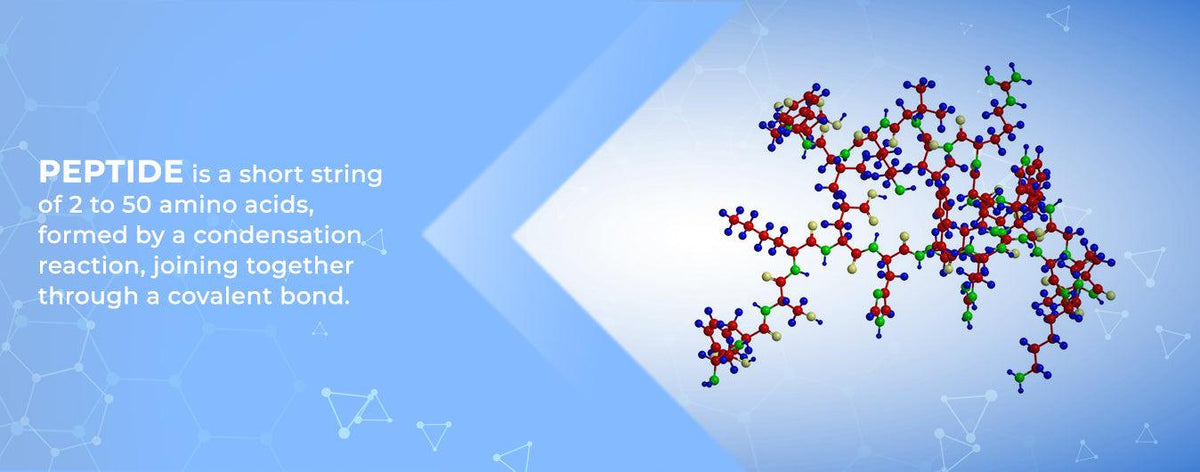
Peptides are essential in fundamental physiological processes and for many biochemical processes. A peptide is a short string of 2 to 50 amino acids formed by a condensation reaction, joining together through a covalent bond. Sequential covalent bonds with other amino acids yield a peptide chain and the building block of proteins. Peptides are named based on the sequence’s number of amino acid residues.
Peptides found in the skin can act by different mechanisms of action, functioning as epidermal or nervous growth factors or even as neurotransmitters. Due to the extensive functionality of these compounds, there is growing research on bioactive peptides aimed at investigating their uses in products developed for stimulating collagen and elastin synthesis and improving skin healing.
Peptides incorporated in anti-ageing cosmetic products from 2011 to 2018 were disclosed, and a trend towards increased use was noted, reaching 25% of the anti-ageing products from the studied market. The variety of peptides used and the number of products containing peptide combinations have nearly doubled. Considering their mechanism of action, signal peptides are the most used ingredients, followed by neurotransmitter-inhibiting and carrier peptides. The growth of the anti-ageing cosmetic market, the innovation potential from this field, and the emergence of biotechnology may present opportunities for scientists to develop new, more effective peptides.
The development of synthetic peptides for skin care dates to the 1980s. The use of peptides in anti-ageing cosmetics increased by 7.2%, while the variety and the number of peptide combinations in products have increased by 88.5%. In descending order, the most used peptides in antiaging cosmetic formulations are Palmitoyl Tetrapeptide-7, Palmitoyl Oligopeptide and Acetyl Hexapeptide-8. In 2011, most peptides were obtained from synthesis, while in 2018, biotechnology processing was the dominant source.
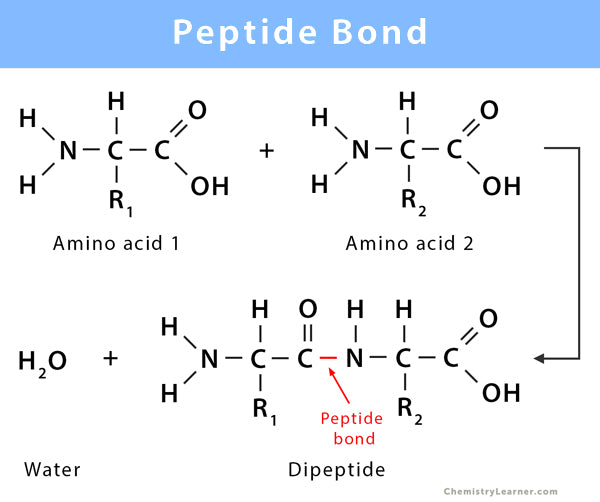
A peptide bond is a covalent chemical bond formed by linking the carboxyl group of one free amino acid molecule to the amino group of another. During this process, a water molecule is released – a process known as dehydration or condensation. A long chain of amino acids is linked by peptide bonds (CO-NH). It is a strong bond that is commonly found in proteins.
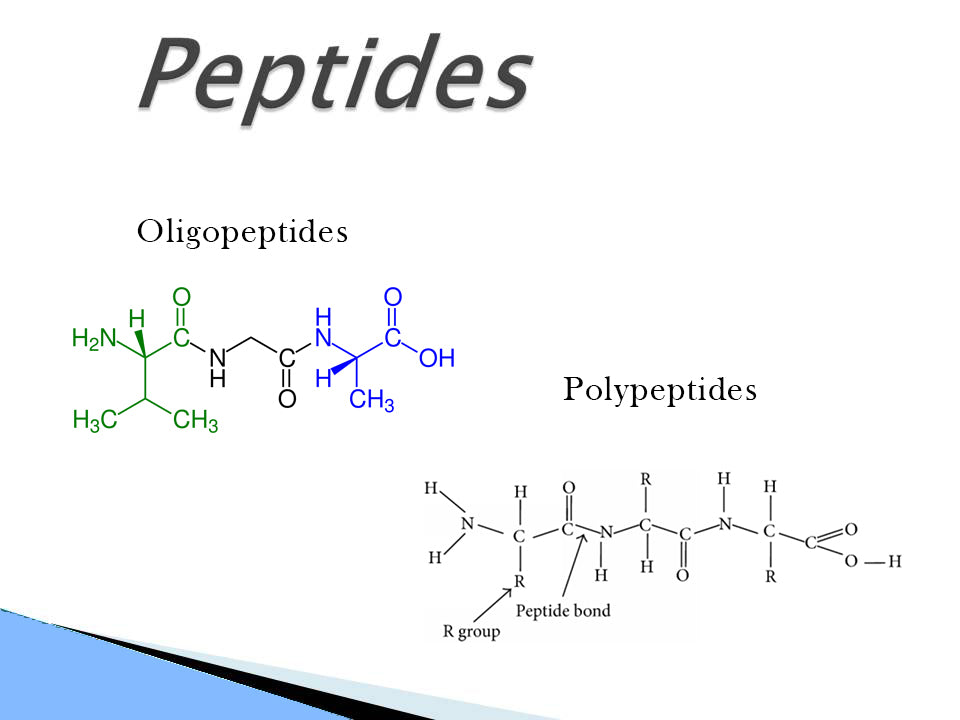
Dipeptides- Compounds are formed when two amino acids are linked by one peptide bond.
Tripeptides- Compounds are formed when two peptide bonds link three amino acids.
Oligopeptides- Compound formed when peptide bonds link more than two and less than 20 amino acids.
Polypeptides- Compounds are formed when peptide bonds link more than 20 amino acids.
Naturally occurring peptides in the human skin can serve biological activities and act as signalling molecules of various physiological processes such as growth, defence or immunity. Researchers consider peptides promising compounds with potential applications for human diagnosis, therapy or cosmetics. Peptides are becoming interesting cosmetic ingredients with the functions to reduce premature skin ageing, improve the barrier function of skin, moisturise the skin, protect it from UV damage, and have anti-inflammatory properties that alleviate acne and irritation. Peptides of different origins were investigated in formulations developed to enhance collagen or elastin production, increase fibroblast proliferation, and improve wound healing or skin condition. Most are obtained by chemical synthesis or partial digestion of animal proteins.
Nowadays, peptides are cheaper and easier to produce in large quantities. The efficient process development methods allow for obtaining nearly unlimited sequences, which makes them functionally preferred. Generally, cosmetic peptides are categorised as carrier peptides, a neurotransmitter- affecting peptides, enzyme inhibitor peptides and signal peptides. The use of signal peptides in cosmetics increased over a few years. These molecules trigger a signalling cascade and stimulate fibroblast collagen production, the proliferation of elastin, fibronectin, laminin, etc.
Peptides are an increasingly common component of the resources against dark circles. More than 25 peptide formulations are currently used in compounds designed to improve skin quality. These molecules generally act within the skin’s extracellular matrix (ECM) to promote collagen formation. Cosmeceutical peptides are classified into signal peptides, enzyme inhibitor peptides and carrier peptides. Signal peptides such as palmitoyl pentapeptide-4 stimulate extracellular matrix (ECM), modulating fibroblast activity to increase type I and III collagen and fibronectin production. It also increases elastin, proteoglycan, glycosaminoglycan and fibronectin proliferation. Enzyme inhibitor peptides primarily block proteinase formation and activity & maintaining a robust extracellular matrix (ECM) in the skin. Carrier peptides' primary function is to deliver enzymatic cofactors such as copper and manganese, critical in wound healing and skin regenerative properties. In these various ways, peptides improve the quality and turgor of the skin.
Skin is the largest organ in the body; it changes with time like other organs. The alterations due to the ageing process include elastosis, leathery aspect or roughness, pigmentation, and the appearance of fine lines. As well as changes due to natural ageing (intrinsic ageing), skin is subject to deterioration caused by dermatological disorders or environmental conditions (wind, air conditioning, heating). The intrinsic ageing process may also be accelerated by exposure to the sun (photo-ageing) or other lifestyle issues (extrinsic ageing: smoking, alcohol, stress, lack of sleep).
Many fundamental processes lead to the changes observed in aged skin, such as alterations in the turnover of the extracellular matrix proteins within the dermal layer of the skin, a rise in inflammatory markers, and reduced blood flow.
Fine lines appear when collagen breakdown within the dermis exceeds its synthesis.
Collagen-peptide supplementation could be an effective remedy to improve hydration, elasticity, and wrinkling in human skin.
Collagen peptides can reduce collagenase and gelatinase activity, triggering a signal cascade which can stimulate the proliferation of collagen, elastin, proteoglycans and glycosaminoglycans directly or indirectly, inhibiting the transmission of neurotransmitters; It can enhance muscle contraction and reduce the common signs of ageing, such as wrinkles, as a carrier, delivering or stabilising trace elements like manganese, contribute to wound healing. Therefore, bioactive peptides play an important role in the field of anti-ageing.
Melanin is produced by melanocytes located in the basal layer of the epidermis to protect skin cells against harmful external agents, including ultraviolet (UV) rays, fine dust, and various chemical compounds.
Hyperpigmentation or hyper melanosis is a skin disorder caused by excessive accumulation of melanin, leaving the skin aesthetically undesirable. It is characterised by darker patches, mainly in the cheeks, upper lip, chin, and forehead.
Although hyperpigmentation is not a life-threatening dermatologic condition, it has psychosocial effects, which may reduce the quality of life for both women and men. Treating hyperpigmentation remains challenging, leaving an unmet demand for a safe and efficacious alternative for skin brightening.
Peptides are a short chain of amino acids linked by peptide bonds. They are widely used as effective and biocompatible active ingredients in the cosmetic industry.
Many skin-brightening agents, such as Kojic acid & and Vitamin C, hydroquinone, and retinoids, have been widely used as topical treatments but with limited efficacy and side effects.
A research study revealed that peptide mixture inhibited melanosome biogenesis by regulating microphthalmia-associated transcription factor (a key factor of melanogenesis in melanocytes). Peptide mixture has strong skin tone modulating and skin brightening effects. It acts by an intelligent mechanism via reducing keratinocyte-induced activation of melanocytes.
It is active on all skin types (Caucasian, Asian and African), where it can reduce acne lesions, alleviate melasma and visibly diminish hyperchromatic spots. It acts in a safe and skin-friendly way and, as a result, inhibits the skin pigmentation process, which is of major cosmetic concern.
The peptide mixture could be used as a new whitening material that facilitates peptides' stability and skin penetration and could be used to develop effective whitening products.
Skin wounds, a common form of skin damage in daily life, remain a serious challenge in clinical treatment. Skin is the largest tissue organ covering the human body and the physical barrier between the inner and outer environment. Inevitably, skin wounds are often achieved in adverse accidents. Once damaged, losing the skin’s defence against harmful stimulus will contribute to side effects, such as infection, shock, and even death. Especially under some conditions (diabetes, infection, et al.), the process of wound healing will be delayed and mostly inflicted on chronic wounds. Therefore, accelerating wound healing is vital to the body.
Wound repair requires a highly complicated process, including three evolutionarily conserved phases, inflammatory reaction, proliferation, and tissue reconstruction. Two types of cells, keratinocytes and fibroblasts, play crucial roles in the healing process of wounds. In addition, structural and functional reconstruction and contraction of differentiated myofibroblasts in granulation tissue were necessary for wound healing processes. Bioactive peptides with high efficiency are potential therapeutic candidates for wound healing.
The research identified a novel peptide from the skin of the amphibian O. andersonii. That could accelerate wound healing at actual concentrations and thus was considered one of the most potent wound-healing accelerating agents. Amphibian skin secretions possess multiple bioactivities, including antioxidants, antimicrobial and wound healing-promoting abilities. Research suggested that Amphibian skin secretions could be a potential template for developing pro-healing agents.
Hydrolysed collagen (HC) is a group of peptides with a low molecular weight that can be obtained by enzymatic action in acid or alkaline media at a specific incubation temperature. Hydrolysed collagen can be extracted from different sources, such as bovine or porcine. These sources have presented health limitations. Recently research has shown good properties of the Hydrolysed collagen found in skin, scale, and bones from marine sources. It is widely used in several industries, including food, pharmaceutical, cosmetic, biomedical, and leather.
Collagen is the most important protein produced by the human body; the amino acid glycine mainly forms it, proline and hydroxyproline (primary structure) in a triplex helix formed by three α chains. Each alpha chain is composed of 1014 amino acids. Nearly 28 types of collagens have been identified, but collagen type I is the most common in skin, bone, teeth, tendon, ligaments, vascular ligature, and organs. Collagen type II is present in the cartilage. For collagen type III, the skin, muscle, and blood vessels are the most common sources of this protein. Type IV has been reported in the epithelium-secreted layer of the basement membrane and the basal lamina. Collagen type V is one of the principal components of cell surfaces and the placenta.
The skin is the largest organ in the human body; collagen elastic fibres and hyaluronic acid are its major structural constituents. The skin protects the organism from external damage, regulates temperature, and performs other bodily functions. Ageing is a natural process which involves changes in the human body; the skin suffers morphologic, structural, and functional deterioration; collagen reduces, and elastin fibres promote the formation of lines and wrinkles.
Skin ageing control is a challenge in the cosmetic industry, but Hydrolysed collagen has proved to be an alternative solution for slowing down the effects of ageing. Hydrolysed collagen exhibited excellent water-holding capacity, moisture absorption, retention, anti-skin ageing, and anti-melanogenic capacities, proving a potential active ingredient in skin care products.
Hydrolysed collagen acts in two different forms in the dermis; in the first action, the free amino acids provide building blocks for forming collagen and elastin fibres. In the second action, collagen oligopeptides act as ligands, binding to receptors on the fibroblasts’ membrane and stimulating the production of new collagen, elastin, and hyaluronic acid.
Peptides act as antioxidants and are helpful for lower high blood pressure, killing microbes, reducing inflammation, preventing blood clot formation, and improving immune function.
Oral supplement time of Peptide depends on the type, brand & doctor’s suggestions. Always follow the package instructions when taking peptide supplements, topical peptide creams, or lotions.
Whenever purchasing Topical products which contain Peptides, It is good to after discussing with Doctor.
Topical creams and ointments containing peptides may cause skin symptoms, such as skin sensitivity, rash, and itching.
It is better always to purchase reputable brand products and discontinue use if any problematic reaction happens.
1. Is peptide good for the skin?
Yes, Peptide is essential for the skin. Peptides are becoming interesting cosmetic ingredients with the functions to reduce premature skin ageing, improve the barrier function of skin, moisturise the skin, protect it from UV damage, and have anti-inflammatory properties that alleviate acne and irritation.
2. Is peptide good for the hair?
Yes, Peptide is good for hair. Peptides could bind to hair proteins, be absorbed by the hair fibre, and improve damaged hair mechanical properties. Each peptide has a specific amino acid sequence crucial for its behaviour towards hair proteins.
According to research, A copper-binding peptide had the effect of follicular enlargement on the back skin of fuzzy rats, covering the vellus follicles; the effect was like that of topical minoxidil. Analysing the quantitative sequences of follicular size and cyclic phases, the triggering mechanism of the androgen phase is observed in the follicular dermal papilla interaction.
3. Is peptide an active ingredient?
Cosmeceuticals are the identification and characterisation of the active ingredients and demonstrating their efficacy. An interesting group of bioactive cosmeceutical ingredients are peptides, which due to their properties, meet most of the requirements presented by the cosmeceutical industry when composing new formulas. Besides bioactivity, two additional aspects have been recently considered when dealing with peptides as cosmeceutical ingredients. They are bioavailability and stability.
4. Is peptide a steroid?
Peptide hormones are polymers comprising small chains of amino acids. Endocrine glands in the human body produce various peptide hormones circulating in the bloodstream, such as insulin, glucagon, somatostatin, ghrelin, oxytocin, etc. These hormones bind to the tissues in the target organs.
Steroid hormones are synthesised within the adrenal glands or gonads in the human body. They are responsible for maintaining the fundamental physiological processes of metabolism, pH balance, immunity protection, and normalising inflammation. Some examples of human steroid hormones are androgen, estrogen, and progesterone, secreted from both male and female gonads. Although our body produces this class of hormones sufficiently, they still find uses in the therapeutic field.
5. Is peptide serum good for acne?
The serum, which contains peptides, is suitable for acne-prone skin. According to research, the synthetic peptide, which contains anti-microbial and anti-inflammatory properties, can rid the skin of acne-causing bacteria.
6. Is peptide a bond?
Yes, peptides are amide bonds. Peptide bonds are found between two monomer units of amino acids in a polypeptide chain.
7. Are peptides and proteins the same?
A peptide is a short chain of amino acids. The amino acids in a peptide are connected in a sequence by peptide bonds. A polypeptide is a chain of many amino acids. A protein contains one or more polypeptides. Therefore, proteins are long chains of amino acids held together by peptide bonds.
8. Is peptide bond present in DNA?
No, the Peptide bond is absent in DNA.
9. What is a natural peptide?
Peptides are short chains of amino acids that are smaller than proteins. Peptides, including the human body, are naturally present in living organisms and have long chain lengths of approximately 20 amino acids.
10. What is a peptide?
A peptide is a short chain of amino acids (typically 2 to 50) linked by chemical bonds (called peptide bonds). A polypeptide is a chain of linked amino acids (51 or more). The proteins manufactured inside cells are made from one or more polypeptides.
11. What peptide is best for fat loss?
Peptides promote weight loss by promoting food satiety and increasing muscle mass. Peptides are administered as supplements, oral gels, topical treatments, and transdermal or subcutaneous injections.
12. How many peptide bonds are present in tripeptide?
A tripeptide is a peptide derived from three amino acids joined by two or sometimes three peptide bonds.
13. How many peptide bonds are present in dipeptide?
A dipeptide comprises two peptide bonds between amino acids.
14. How many peptide bonds are present in glutathione?
Glutathione is a peptide composed of three nonessentials (not essential to the human diet as the body can synthesise these amino acids). In the body, glutathione exists in both oxidised and reduced states. The reduced form of glutathione is a tripeptide comprised of three amino acids (glutamic acid, cysteine, and glycine) linked by two peptide bonds: one between glutamic acid and cysteine and the other between cysteine and glycine.
15. Is the peptide bond covalent?
The peptide is a covalent bond (adjoining amino acids and keeping them together).
16. Are peptide hormones lipophilic?
Peptide hormones are hydrophilic, not lipophilic. They are soluble in water.
17. Can peptides be used with Vitamin C?
Vitamin C and peptides are widely used in cosmetic product formulations that effectively treat signs of facial ageing.
18. Can peptide and retinol be used together?
Yes, both can mix. They complement each other very well. Because retinol can cause irritation and dryness in the skin, peptides help reduce that irritation and strengthen the skin.
19. Can peptides be used with salicylic acid?
Peptides and salicylic acid should not be used simultaneously because salicylic acid can make peptides less efficacious.
20. Can peptides be used daily?
Peptide can be used daily, depending on the skin condition and the doctor’s suggestion. If feeling any discomfort, get rid of using it.
Keld Fosgerau, T. H. ( 2014, October 16). Peptide therapeutics: current status and future directions. Drug Discovery Today, xxii(1), 122-128. doi:https://doi.org/10.1016/j.drudis.2014.10.003
https://www.sciencedirect.com/science/article/pii/S1359644614003997
Arely León-López, A. M.-P.-J.-T.-Á. ( 2019, November 7). Hydrolyzed Collagen—Sources and Applications. Molecules. doi:https://doi.org/10.3390/molecules24224031
https://www.mdpi.com/1420-3049/24/22/4031
Tamyres Nassa Lima, C. A. ( 2018, March 5 ). Bioactive Peptides: Applications and Relevance for Cosmeceuticals. Cosmetics, v(1). doi:https://doi.org/10.3390/cosmetics5010021
Arely León-López, A. M.-P.-J.-T.-Á. ( 2019, November 7). Hydrolyzed Collagen—Sources and Applications. Molecules. doi:https://doi.org/10.3390/molecules24224031
Britannica, T. E. (2023, March 07). Peptide chemical compound. Encyclopedia Britannica. Retrieved from https://www.britannica.com/science/peptide/additional-info#history
Byong Seung Cho, J. L.-H. (2020, November 13). Skin Brightening Efficacy of Exosomes Derived from Human Adipose Tissue-Derived Stem/Stromal Cells: A Prospective, Split-Face, Randomized Placebo-Controlled Study. Cosmetics, vii(4). doi:https://doi.org/10.3390/cosmetics7040090
Do-Un Kim, H.-C. C.-Y. (2018, June 26 ). Oral Intake of Low-Molecular-Weight Collagen Peptide Improves Hydration, Elasticity, and Wrinkling in Human Skin: A Randomized, Double-Blind, Placebo-Controlled Study. Nutrients, x(7). doi:https://doi.org/10.3390/nu10070826
https://doi:https://doi.org/10.3390/molecules24224031Elena P. Ivanova, K. B. (2014). 3 - Advanced synthetic polymer biomaterials derived from organic sources. In New Functional Biomaterials for Medicine and Healthcare (pp. 71-99). doi:https://doi.org/10.1533/9781782422662.71
Eung-Ji Lee, J. K. (2021 , Jan 1). Whitening effect of novel peptide mixture by regulating melanosome biogenesis, transfer and degradation. The Korean Journal of Physiology & Pharacology, 15–26. doi:10.4196/kjpp.2021.25.1.15
https://doi:https://doi.org/10.3390/molecules24224031Forbes, J., & Krishnamurthy, K. (2023). Biochemistry, Peptide. In StatPearls [Internet]. Retrieved from https://www.ncbi.nlm.nih.gov/books/NBK562260/
Hideo Uno, S. K. ( 1993, July). Chemical agents and peptides affect hair growth. Journal of Investigative Dermatology, S143-S147. doi:https://doi.org/10.1016/0022-202X(93)90516-K
Ivan Vrcek, O. O. (2016 , Apr-Jun). Infraorbital Dark Circles: A Review of the Pathogenesis, Evaluation and Treatment. Journal of Cutaneous and Aesthetic Surgery, ix, 65–72. doi:https://www.ncbi.nlm.nih.gov/pmc/articles/PMC4924417/
Karki, G. ( 2018, January 26). Peptide: Types and functions. Online Biology Notes. Retrieved from https://www.onlinebiologynotes.com/peptide-types-functions/
M. Mentel, J. S. (2012, 3). Innovative Peptide Technologies for Even,. SOFW- Journal. Retrieved from http://xmedicimports.com/shop/images/International%20Journal%20-%20TEGO%C2%AE%20Pep%204-Even.pdf
Marta Salvador Ferreira, M. C.-L. ( 2020, November 14 ). Trending Anti-Aging Peptides. Cosmetics, vii(4). doi:https://doi.org/10.3390/cosmetics7040091
Maryam Borumand, S. S. (2015). Effects of a nutritional supplement containing collagen peptides on skin elasticity, hydration and wrinkles. Journal of Medical Nutrition & Nutraceuticals, iv(1), 47-53. doi:10.4103/2278-019X.146161
Perlikowska, A. S. ( 2021, August 12). Signal Peptides - Promising Ingredients in Cosmetics. Current Protein & Peptide Science, xxii(10), 716 - 728. doi:10.2174/1389203722666210812121129
Rui Han a, H.-M. B. ( 2018, January). The antimicrobial effect of CEN1HC-Br against Propionibacterium acnes and its therapeutic and anti-inflammatory effects on acne vulgaris. Peptides, xxxxxxxxxix, 36-43. doi:https://doi.org/10.1016/j.peptides.2017.11.001
Tamyres Nassa Lima, C. A. ( 2018, March 5 ). Bioactive Peptides: Applications and Relevance for Cosmeceuticals. Cosmetics, v(1). doi:https://doi.org/10.3390/cosmetics5010021
Xiaocao Zhao, X. Z. ( 2021, August 11). Collagen peptides and the related synthetic peptides: A review on improving skin health. Journal of Functional Foods. doi:https://doi.org/10.1016/j.jff.2021.104680
Yongli Song, C. W. (2019 , Mar 29). A short peptide potentially promotes the healing of skin wound. Bioscience Reports, xxxix(3). doi:10.1042/BSR20181734

0 comments